
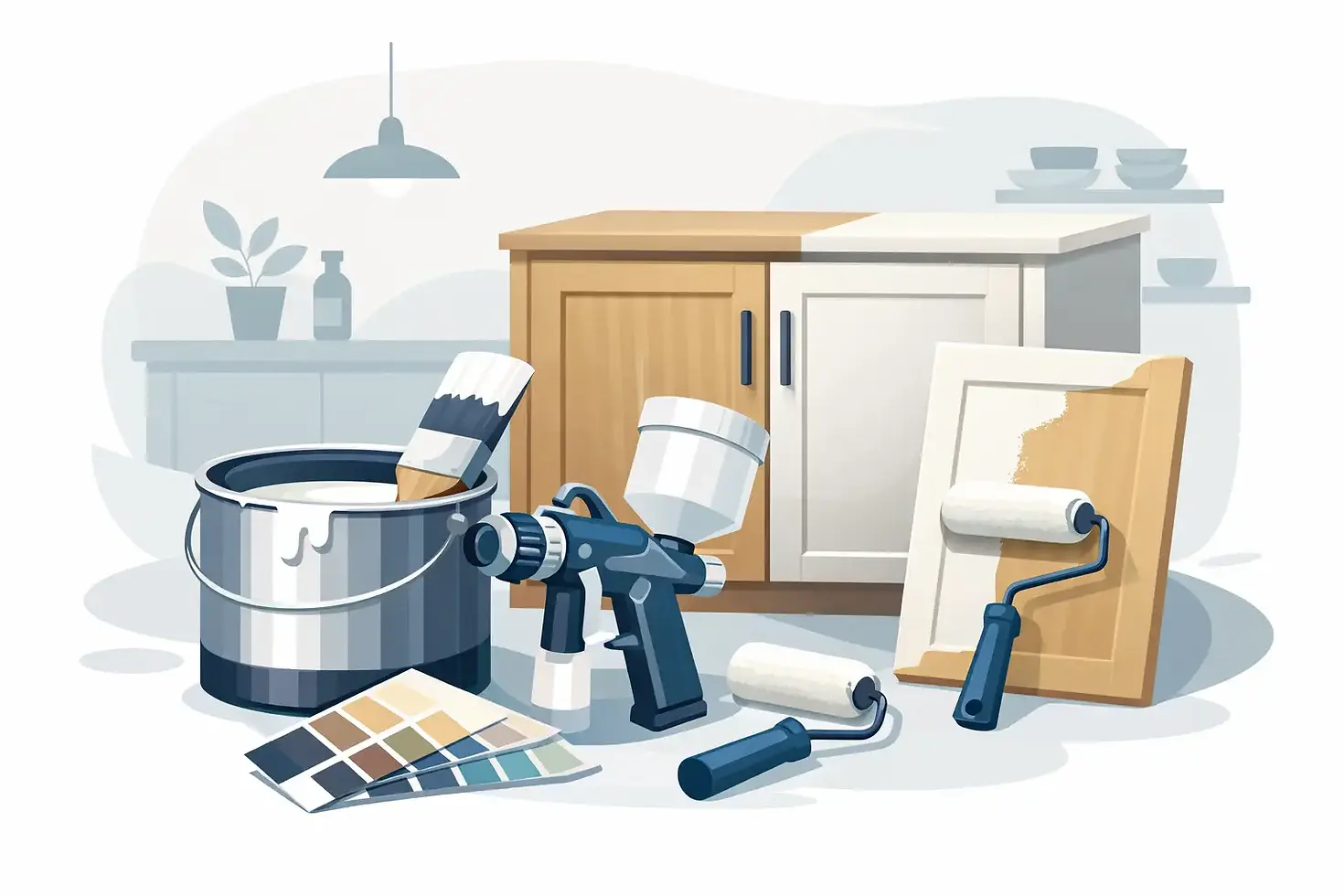
What Is Cabinet Grade Paint?
If you have ever run your hand across a freshly painted cabinet door and wondered why it feels smoother, harder, and more durable than a painted wall, the answer usually comes down to the coating itself. What is cabinet grade paint? In simple terms, it is a finish designed to bond well to cabinetry and cure into a surface that can handle daily use, cleaning, moisture, and constant contact.
That distinction matters more than most homeowners realize. Cabinets are not passive surfaces. They are opened, bumped, wiped down, exposed to cooking residue, and touched every day. A paint that looks fine on drywall often will not hold up the same way on cabinet doors and drawer fronts.
What is cabinet grade paint, really?
Cabinet grade paint is not just any paint in a different color. It refers to coatings formulated for harder, smoother, more durable finishes on surfaces like wood cabinets, MDF, trim, and millwork. These products are made to level out better, resist wear, and create a finish that looks refined rather than soft or chalky.
In most cases, cabinet grade coatings dry and cure harder than standard wall paint. They are also chosen for their adhesion, which helps the finish grip slick or previously coated cabinet surfaces after proper prep. That is a big reason professionals use different products for cabinets than they do for living room walls or bedroom ceilings.
The phrase itself is somewhat broad. It can include high-quality enamel paints, acrylic-alkyd hybrids, and other specialty coatings intended for trim and cabinetry. So when homeowners ask what is cabinet grade paint, the better question is often this: is the product being used actually made for cabinets and applied the right way?
Why regular wall paint is not enough
Wall paint is built for a different job. It is designed to spread efficiently across large drywall surfaces, hide minor imperfections, and provide an even appearance from room to room. That works well on walls because walls do not face the same kind of friction and repeated handling as cabinets.
Kitchen and bathroom cabinets deal with grease, fingerprints, water splashes, and frequent cleaning. A standard interior latex wall paint may look acceptable at first, but it can scratch easier, feel softer, and show wear much faster. It may also fail to level as smoothly, which can leave brush marks or a slightly uneven texture.
That is where cabinet-specific coatings stand apart. They are selected to create a tighter, smoother finish with better resistance to scuffs and routine cleaning. For homeowners investing in a kitchen refresh, that difference can affect both appearance and longevity.
What makes cabinet grade paint different?
The biggest differences come down to hardness, adhesion, and finish quality. Cabinet grade paint is usually formulated to cure into a harder shell than typical wall paint. That helps doors and drawers stand up better to everyday use.
It also tends to have better leveling properties. Leveling means the paint settles out as it dries, reducing visible roller stipple or brush lines. On cabinets, where every angle is more noticeable, that smoother finish makes a major difference.
Adhesion is another key factor. Cabinets often have old coatings, factory finishes, or slick surfaces that need a product capable of bonding well after cleaning, sanding, and priming. Even excellent paint will struggle if prep is poor, but cabinet grade products are made with these conditions in mind.
Then there is washability. A cabinet finish should tolerate light scrubbing and routine wipe-downs without wearing away quickly. In a busy kitchen, that is not a luxury. It is part of what keeps the project looking good months and years later.
Cabinet grade paint is only part of the result
This is where expectations need to be realistic. A premium cabinet coating matters, but it is not a shortcut around prep work. If cabinets are not cleaned thoroughly, sanded correctly, repaired where needed, and primed with the right products, even a strong coating can fail.
That is why cabinet painting is more specialized than many homeowners expect. The finish people notice at the end is tied to every step before the paint goes on. Surface contamination, old grease, chipped edges, and glossy factory coatings can all interfere with the final result if they are not handled properly.
It also takes time for cabinet paint to cure. Dry and cured are not the same thing. Cabinets may be dry to the touch relatively quickly, but full hardness develops over time. During that curing window, careful use matters. A professional should explain what to expect so the finish has the best chance to perform as intended.
What finishes are common for cabinets?
Most cabinet projects use satin, semi-gloss, or a low-luster enamel finish, depending on the style of the home and the look the homeowner wants. Many people assume shinier is always better, but that is not necessarily true.
Higher sheen can make cabinets easier to wipe down, but it can also highlight surface flaws more readily. A lower sheen may feel softer visually and hide minor imperfections better, but the exact product still needs to be durable enough for cabinetry. The right choice depends on the cabinet material, the condition of the existing surfaces, and the overall design of the space.
Color also plays a role. Deep colors, bright whites, and trendy tones can all look beautiful on cabinets, but they may behave differently in terms of coverage, touch-ups, and wear visibility. A good cabinet painting process accounts for those trade-offs before the job begins.
Where cabinet grade paint works best
The most obvious place is the kitchen, but it is not the only one. Bathroom vanities, laundry room cabinets, mudroom built-ins, and other high-use storage areas also benefit from cabinet grade coatings. Any surface that gets frequent contact and needs a more refined finish may call for the same level of product and prep.
Trim, interior doors, and built-in shelving can also be painted with similar coatings when a harder, furniture-like finish is the goal. That said, the best product still depends on the surface and the room. Not every trim paint is ideal for every cabinet, and not every cabinet coating is the best choice for every part of the house.
How homeowners can tell if a painter is using the right product
You do not need to become a coatings expert to ask good questions. Start with the basics. Ask whether the product is specifically intended for cabinets or trim and millwork. Ask how the surface will be cleaned and prepared. Ask whether a primer is part of the system and what the cure time will be.
Those questions often reveal a lot about the process. If the answer sounds like the same paint used on walls will simply be brushed onto cabinets, that is worth a second look. Cabinet painting should feel more intentional than that.
A dependable contractor will explain the system in a clear, straightforward way. You should understand what is being applied to your cabinets, why it is being used, and what kind of finish and durability you can reasonably expect.
Is cabinet grade paint worth it?
For most homeowners, yes. Cabinets are one of the most visible features in a kitchen or bathroom, and a poor finish can make the entire room feel unfinished. Using the right cabinet coating helps protect that investment and supports a cleaner, more polished result.
It is also often more cost-effective than replacing cabinets that are structurally sound but visually dated. A quality cabinet painting project can give the room a fresh, updated look without the expense and disruption of a full replacement. The key is making sure the work is done with the right materials and the right process.
If you are comparing quotes, remember that not all cabinet painting is equal. Lower pricing can sometimes reflect shortcuts in prep, product quality, or application method. For a surface you use every day, those shortcuts tend to show up sooner rather than later.
For homeowners in Ocala who want a smoother finish, clear communication, and results that hold up to real life, understanding what cabinet grade paint is can help you ask better questions and make a more confident decision. The best finish is not just about color - it is about choosing a system built for the way your home is actually used.


Comments