

Spray Painting vs Brush: Which Finish Wins?
A cabinet door can look freshly updated or noticeably homemade based on one decision: how the paint is applied. Spray painting vs brush is not simply a matter of picking the faster tool. It affects the smoothness of the finish, the prep required, the disruption inside your home, and the long-term appearance of high-visibility surfaces.
For many homeowners, especially those planning a cabinet refresh, the best choice depends on the surface and the result they want to see every day. A professional painter may use spraying, brushing, rolling, or a combination of methods on the same project. The goal is not to use one technique everywhere. It is to choose the method that gives your home a clean, durable finish.
Spray Painting vs Brush: The Main Difference
Spray painting applies a fine, even mist of paint across a surface. When the material is properly prepared and the spray equipment is correctly adjusted, it can create a remarkably smooth finish with little visible texture. This is why spraying is often the preferred method for cabinet doors, drawer fronts, trim, and other detailed surfaces where a polished appearance matters.
Brushing applies paint directly with bristles. It offers more control in tight areas and around detailed edges, but brush marks can remain if the paint is applied too heavily, the wrong brush is used, or the coating begins to dry before it has time to level out. High-quality paint and careful technique can minimize those marks, but a brushed surface rarely has the same uniform look as a properly sprayed cabinet finish.
Neither method is automatically better for every room. The right answer comes down to the surface, the condition of the home, and the level of finish you expect.
When Spray Painting Is the Better Choice
Spraying is usually the strongest option when smoothness and consistency are the priority. Kitchen cabinets are the clearest example. Cabinet doors are viewed up close under direct lighting, and small imperfections tend to stand out. A sprayed finish can give painted cabinets the refined, factory-like appearance homeowners often want when updating a dated kitchen.
Spray painting also works well for doors, baseboards, crown molding, shutters, and furniture-style trim. It covers detailed profiles evenly and reaches grooves that can be difficult to coat smoothly with a brush alone. On larger groups of cabinet doors, spraying can also be more efficient once the setup is complete.
That setup is a meaningful part of the process. Professional spraying requires careful masking, surface protection, ventilation planning, and dust control. Cabinet doors may be removed and finished in a controlled area, while cabinet boxes are protected and sprayed with precision in the kitchen. This preparation takes time, but it protects floors, countertops, appliances, and nearby rooms from overspray.
Spraying is also less forgiving of poor prep. Dust, grease, sanding scratches, and small dents can show through a smooth finish. For that reason, the best-looking sprayed projects begin with thorough cleaning, repairs, sanding, and the right primer. The paint application is only one part of a durable result.
Why cabinets benefit from spraying
Cabinets handle daily use. Hands touch them, doors close against frames, and kitchens expose them to moisture, cooking residue, and frequent cleaning. A cabinet painting process should account for all of that, not just the color choice.
Spraying allows thin, even coats that can build a consistent finish without loading paint into corners or leaving heavy brush texture on flat door panels. Paired with proper preparation and curing time, it helps create a finish that looks intentional and holds up better to normal household use.
When a Brush Is the Better Choice
A brush remains an essential painting tool, even on projects that involve spraying. It is often the better choice for small repairs, narrow corners, detailed touch-ups, and places where masking an entire area for spraying would create more inconvenience than value.
For example, a brush can be ideal for touching up a small area of trim, painting a single repaired section, or working around hardware and architectural details. It provides close control and makes it easier to work paint into small gaps. On exterior surfaces, brushing may also be useful for working coating into rough wood grain, cracks, and uneven areas before other application methods are used.
Brushing can be practical for homeowners taking on a modest project, but it takes patience. The brush should match the paint type, the paint should be applied in manageable sections, and each stroke should be laid off gently rather than repeatedly worked. Going back over paint as it starts to dry is one of the quickest ways to create drag marks and uneven texture.
A brush is not necessarily the wrong choice for cabinets, particularly for a small touch-up. But for a full kitchen transformation where the doors and drawer fronts need to look consistently smooth, brushing alone often falls short of the finish homeowners expect.
What About Walls?
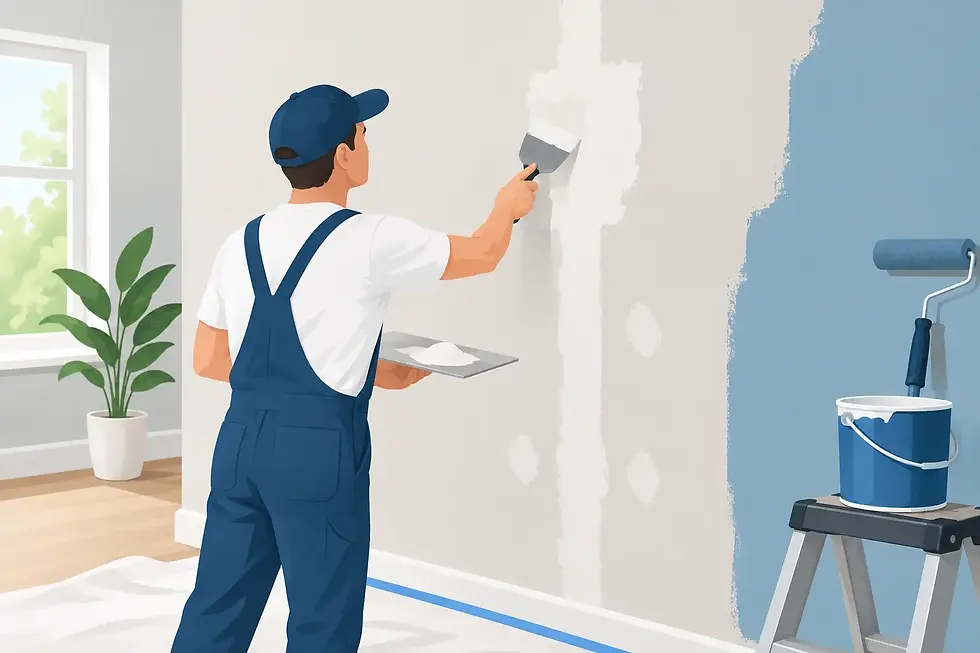
Walls are a different conversation. Most interior walls are best painted with a roller and brush combination rather than spraying every surface. A roller covers broad wall areas efficiently and leaves a light, consistent texture that blends well across the room. A brush is used to cut in cleanly along ceilings, trim, corners, and fixtures.
Spraying interior walls can be useful in an empty home, a new construction setting, or a major renovation where floors, windows, and other surfaces can be fully protected. It can cover large areas quickly. In a furnished, lived-in home, however, the masking and protection required may outweigh the speed advantage.
For occupied homes, a thoughtful approach often causes less disruption. The right method should protect your belongings, maintain clean work areas, and still deliver even coverage and crisp lines.
Cost, Time, and Disruption
Homeowners sometimes assume spraying always costs more because it involves specialized equipment. The reality is more nuanced. Spraying can be efficient on a large set of cabinet doors or extensive trim, but it also requires substantial preparation. Masking, containment, removal of doors and hardware, and cleanup all take skilled labor.
Brushing may require less setup for a small area, yet it can take longer to achieve even coverage on detailed surfaces. If visible brush marks lead to extra coats or corrections, the initial convenience can disappear.
The most useful question is not, "Which method is cheapest?" It is, "Which method delivers the finish I want while protecting my home and keeping the project manageable?" A clear estimate should account for preparation, materials, paint quality, repairs, application method, and the level of protection needed in your space.
The Finish Matters More Than the Tool
A smooth finish is appealing, but durability matters just as much. Whether paint is sprayed or brushed, it needs a clean, stable surface underneath. Glossy cabinets may need sanding or deglossing. Bare wood may need a stain-blocking primer. Damaged areas need repair before the first coat goes on. Skipping these steps can lead to peeling, chipping, bleed-through, or an uneven appearance.
Color and sheen also affect what you see. Dark colors and higher sheens reveal texture more readily than lighter colors or flatter finishes. A kitchen with bright windows or under-cabinet lighting may make even small brush marks more noticeable. This is one reason spraying is often recommended for cabinetry, while brushing remains useful for precise work and touch-ups.
At Eventide Painting Company, the focus is on choosing an approach that fits the surface and your expectations, not forcing every project into the same process. Homeowners deserve clear communication about what the work involves, how their space will be protected, and what kind of finish they can expect.
Choosing the Right Method for Your Project
If you want a quick update to a small section of trim or need to address a minor paint repair, brushing may be practical and effective. If you are repainting walls in a furnished room, rollers and brushes often provide the right balance of coverage, control, and minimal disruption.
If your goal is a major cabinet update with a smooth, furniture-like finish, professional spraying is usually worth the preparation. It is especially valuable when cabinets are a focal point of the kitchen and you want the finished result to feel like a true upgrade rather than a temporary refresh.
Before committing to either method, look closely at the surface, the room’s lighting, the amount of prep needed, and how much disruption your household can comfortably handle. The right painting process should leave you enjoying the finished space, not noticing the application marks every time you walk into the room.


Comments